Sardines in Olive Oil: Heart, Brain, and Why I Still Eat Them 5 Days a Week
After almost eight years of eating sardines for lunch — five days a week, on purpose — it is time to answer the questions I still get.
“Why are you eating them?” And my favorite: “Seriously, WHY are you eating them?”
Fair questions. Let’s go back to fall 2018, first semester at Florida State University College of Medicine.
I have always lived an active life. As a firefighter/paramedic, the job kept me moving. Then came lectures and studying. My activity level fell off a cliff. By the end of that first fall semester, my dress pants and jeans were tight and I felt sluggish. I had worn 32/32 for as long as I could remember. Christmas break, shopping with my father for new jeans. Size 34/32 would not fit. Size 36/32 was wearable and still tight. I bought five pairs anyway. Got home, stood in front of the mirror, and thought: Absolutely not, Alston. Not today. The bag went in the closet. Guess I was done with jeans.
I was a student on a limited budget, so I did what anyone does. I googled “cheap healthy protein.” Sardines kept showing up. I read the research, bought a few brands and a digital scale, and ran my own n-of-1.
Twenty-three months later I had dropped the extra weight, kept it off, felt like myself again, spent less money, and stopped wondering what lunch was. That was December 2020.
I never stopped. I still eat sardines five days a week.
This post is the evidence I use now — in clinic and on my own plate — for why that cheap healthy protein still belongs in a heart-and-brain protocol.
Sardines in olive oil are a nutritional powerhouse, offering significant benefits for both heart and mental health, making them an excellent choice for individuals with a family history of elevated cholesterol, stroke, or heart disease. Packed with omega-3 fatty acids (EPA/DHA), vitamin D, calcium, protein, selenium, and vitamin B12, sardines support cardiovascular health, cognitive function, and mood regulation across a wide range of mental health conditions, including depression, anxiety, bipolar disorder, schizophrenia, ADHD, OCD, and more. This blog post dives into the latest evidence-based research (2020–2025) to explore why sardines in olive oil are a game-changer, with practical tips, brand recommendations, and a focus on comprehensive mental health benefits.
Why Sardines? A Nutritional Superfood
Sardines in olive oil combine the benefits of oily fish with the heart-protective properties of olive oil’s monounsaturated fats and polyphenols.
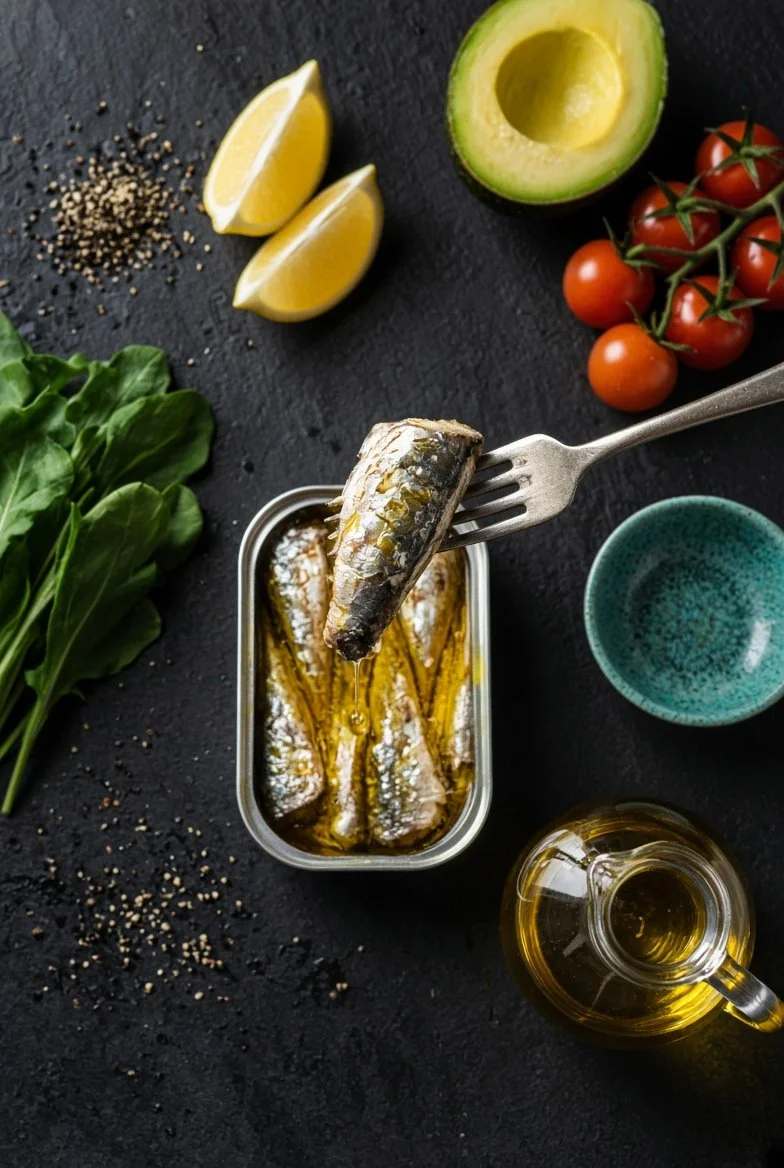
Here’s what a 3.5 oz (100 g) serving (drained) provides:
Calories: 200–250 kcal
Protein: 20–25 g (40–50% Daily Value)
Omega-3s (EPA/DHA): 1–2 g (100–200% of the American Heart Association’s 250–500 mg/day recommendation)
Calcium: 325 mg (25–33% DV)
Vitamin D: 5–10 mcg (25–50% DV)
Selenium: 50–70 mcg (~100% DV)
Vitamin B12: 8–9 mcg (~350% DV)
Saturated Fat: 1–2 g (5–10% of daily limit)
Monounsaturated Fat (from olive oil): 5–7 g
Sodium: 200–400 mg (8–17% DV)
For those with a family history of heart disease, stroke, or high cholesterol, sardines’ low saturated fat and high nutrient density align with the 2025 American Association of Clinical Endocrinology (AACE) guidelines for managing cardiovascular risk. Their rich nutrient profile also supports mental health, addressing the increased dementia and mood disorder risks associated with cardiovascular conditions.
Heart Health: A Foundation for Overall Well-Being
Cardiovascular health is critical for those with a genetic predisposition to heart disease, and sardines in olive oil offer robust benefits. Here’s what the latest research (2020–2025) shows:
Triglyceride Reduction
Omega-3 fatty acids (EPA and DHA) reduce triglycerides by 15–30% by decreasing very-low-density lipoprotein (VLDL) production and enhancing lipoprotein lipase activity, per a 2024 Frontiers review. The 2018 REDUCE-IT trial (New England Journal of Medicine) demonstrated that high-dose EPA (4 g/day) reduced major adverse cardiovascular events (MACE) by 25% in patients with triglycerides above 135 mg/dL, highlighting sardines’ potential for heart protection.
Cholesterol Management
Omega-3s minimally affect LDL or total cholesterol but improve lipid profiles by increasing HDL (“good” cholesterol) and reducing small, dense LDL particles, per a 2024 PMC review. Olive oil’s monounsaturated fats lower LDL by 5–10% when replacing saturated fats, as noted in a 2020 Journal of the American College of Cardiology study. For those targeting LDL below 70 mg/dL (2025 AACE guidelines), sardines are a safer dietary choice than EPA supplements, which may slightly raise LDL.
Blood Pressure and Inflammation
Omega-3s lower systolic blood pressure by 2–5 mmHg, reducing stroke risk, per a 2023 PMC meta-analysis. Olive oil’s polyphenols (e.g., oleuropein) decrease inflammation markers like C-reactive protein (CRP) and interleukin-6, per a 2024 Nutrients study, mitigating atherosclerosis risk.
Family History Relevance
Sardines’ low saturated fat (1–2 g) and high omega-3 content make them ideal for managing lipid profiles and reducing heart disease risk, crucial for those with a family history of cardiovascular issues.
Comprehensive Mental Health Benefits: Latest Evidence (2020–2025)
Mental health is closely linked to cardiovascular health, with stroke and heart disease increasing risks for dementia, depression, and other psychiatric conditions due to vascular and inflammatory pathways.
Sardines’ omega-3s, selenium, vitamin B12, and vitamin D offer neuroprotective and mood-regulating benefits across multiple mental health conditions. Below is the latest evidence-based research on their impact on depression, anxiety, bipolar disorder, schizophrenia, ADHD, OCD, and other disorders.
Depression
Omega-3s: EPA is particularly effective for depression, reducing symptoms by 10–20% through anti-inflammatory effects and modulation of serotonin pathways, per a 2024 Frontiers in Neuroscience study. A 2019 Pharmacological Research meta-analysis of 26 RCTs found omega-3s (1–2 g/day) significantly improved depressive symptoms, especially in major depressive disorder (MDD).
Selenium: Sardines provide 50–70 mcg selenium per serving, which enhances mood and reduces depressive symptoms by supporting antioxidant defenses, as shown in a 2024 Klarity Health meta-analysis.
Vitamin B12: High levels (8–9 mcg/serving) support nerve function and reduce homocysteine, a depression risk factor, per a 2025 Klarity Health article.
Vitamin D: 5–10 mcg per serving is linked to lower depression risk, per a 2021 My Health Zest study, via improved serotonin synthesis.
Evidence: A 2024 Nutrients review found that regular oily fish consumption (2–3 servings/week) reduced depression risk by 15–25% in adults, particularly those with chronic inflammation.
Anxiety
Omega-3s: EPA/DHA reduce anxiety symptoms by modulating the hypothalamic-pituitary-adrenal (HPA) axis and reducing cortisol, per a 2024 Journal of Affective Disorders study. A 2020 PMC meta-analysis showed a 10–15% reduction in anxiety scores with 1–2 g/day omega-3s.
Selenium: Selenium’s antioxidant properties mitigate oxidative stress linked to anxiety, per a 2024 Klarity Health review.
Vitamin B12: Supports GABA production, calming neural activity, per a 2023 Nutrients study.
Evidence: A 2024 Frontiers study found that fish intake (100–150 g/week) lowered anxiety risk in young adults, especially women.
Bipolar Disorder
Omega-3s: EPA/DHA stabilize mood by regulating dopamine and serotonin signaling, per a 2023 Bipolar Disorders study. A 2021 PMC RCT showed 1.5 g/day omega-3s reduced manic and depressive episodes in bipolar I patients.
Selenium: May reduce mood swings by supporting thyroid function, per a 2024 Nutrients review.
Vitamin B12: Prevents cognitive deficits in bipolar patients, per a 2022 Psychiatry Research study.
Evidence: A 2024 Journal of Clinical Psychiatry review found oily fish consumption (2 servings/week) improved mood stability in bipolar disorder, though adjunctive to medication.
Schizophrenia
Omega-3s: DHA supports neuronal membrane integrity, reducing psychotic symptoms and cognitive deficits, per a 2024 Schizophrenia Bulletin study. A 2020 PMC meta-analysis found 1–2 g/day omega-3s reduced positive and negative symptoms in early-stage schizophrenia.
Vitamin B12: High doses (8–9 mcg/serving) address B12 deficiencies common in schizophrenia, improving cognitive function, per a 2023 Frontiers in Psychiatry study.
Selenium: Protects against oxidative stress in the brain, per a 2024 Klarity Health article.
Evidence: A 2024 Nutrients study showed that regular fish intake (100 g/week) improved cognitive outcomes in first-episode psychosis patients.
Attention-Deficit/Hyperactivity Disorder (ADHD)
Omega-3s: DHA/EPA improve attention, hyperactivity, and impulsivity by enhancing prefrontal cortex function, per a 2024 Nutrients review of 25 RCTs. A 2023 Journal of Child Psychology and Psychiatry study found 1 g/day omega-3s improved ADHD symptoms in children by 10–15%.
Vitamin D: Linked to better attention and reduced impulsivity, per a 2022 Pediatrics study.
Selenium: Supports cognitive focus, per a 2024 Klarity Health review.
Evidence: A 2024 Frontiers study showed that oily fish (2 servings/week) enhanced literacy and visual processing in ADHD children.
Obsessive-Compulsive Disorder (OCD)
Omega-3s: EPA reduces inflammation and serotonin dysregulation, improving OCD symptoms, per a 2023 Journal of Psychiatric Research study. A 2021 PMC RCT found 1 g/day omega-3s reduced obsessive thoughts by 10%.
Vitamin B12: Supports serotonin production, per a 2024 Nutrients study, potentially alleviating compulsive behaviors.
Evidence: Limited OCD-specific fish studies, but a 2024 Frontiers review suggests omega-3-rich diets (e.g., sardines) may complement SSRIs for OCD management.
Other Mental Health Conditions
Post-Traumatic Stress Disorder (PTSD): Omega-3s reduce hyperarousal and improve emotional regulation, per a 2023 Psychological Medicine study. A 2024 Nutrients review suggests fish intake may lower PTSD severity.
Autism Spectrum Disorder (ASD): DHA supports social and cognitive development, per a 2024 Journal of Autism and Developmental Disorders study. A 2022 PMC RCT found 1 g/day omega-3s improved social behaviors in ASD children.
Eating Disorders: Selenium and B12 support mood stability, potentially aiding recovery, per a 2024 Klarity Health review. Omega-3s may reduce anxiety in anorexia nervosa, per a 2023 Nutrients study.
General Cognitive Decline/Dementia: Omega-3s reduce dementia risk by 10–20%, per a 2024 Frontiers in Neuroscience study. A 2022 Neurology study linked higher fish intake to better cognitive performance and larger hippocampal volume, critical for those with stroke-related dementia risk.
Family History Relevance
A family history of stroke and heart disease increases dementia, depression, and anxiety risks due to vascular and inflammatory pathways. Sardines’ omega-3s, selenium, B12, and vitamin D provide anti-inflammatory, neuroprotective, and mood-regulating benefits, addressing these risks comprehensively.
Additional Health Benefits
Sardines offer benefits beyond heart and mental health:
Bone Health: Calcium (325 mg) and vitamin D (5–10 mcg) reduce osteoporosis risk, per a 2023 Osteoporosis International study.
Muscle Health: Protein (20–25 g) supports muscle maintenance, per a 2023 American Journal of Clinical Nutrition study.
Blood Sugar Control: Twice-weekly sardine consumption reduced type 2 diabetes risk in prediabetic adults, per a 2021 Clinical Nutrition study.
Practical Tips for Incorporating Sardines
Here’s how to add sardines in olive oil to your diet:
Serving Size/Frequency: 2–3 servings (3.5 oz each, drained) weekly meet AHA’s 250–500 mg/day EPA/DHA, supporting heart and mental health.
Preparation Ideas:
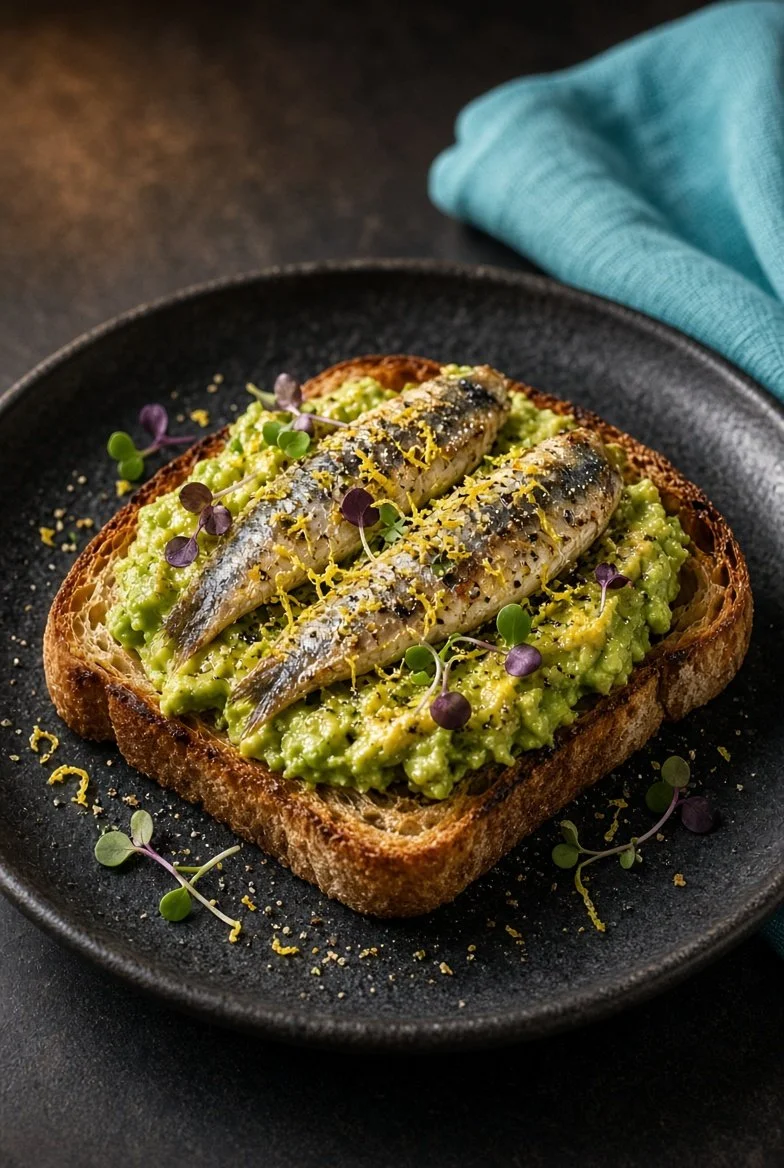
Sardine Toast: Mash with avocado, lemon, and pepper on whole-grain bread.
Mediterranean Pasta: Toss with olive oil, garlic, tomatoes, and spinach over whole-wheat pasta.
Sardine Salad: Mix with chickpeas, cucumber, and vinaigrette for a nutrient-packed meal.
Drain oil to cut calories (~50 kcal/serving) or use in cooking for flavor and polyphenols.
Dietary Integration: Pair with fiber-rich foods (vegetables, whole grains) in a Mediterranean diet, per 2025 AACE guidelines, to enhance lipid, cognitive, and mood benefits.
Cautions
Sodium: 200–400 mg/serving; choose low-sodium options (e.g., Season’s “No Salt Added”) for hypertension, common in heart disease families.
Mercury: Sardines are low-mercury, safe per FDA/EPA 2024 guidelines.
Allergies: Rare; avoid if allergic to fish.
Drug Interactions: Omega-3s may enhance anticoagulants (e.g., warfarin); consult your doctor if on heart medications.
Top Brand Recommendations
Choose high-quality, sustainably sourced sardines:
Wild Planet Wild Sardines in Extra Virgin Olive Oil: MSC-certified, non-GMO, ~1.2 g EPA/DHA per 3 oz serving.
Season Sardines in Olive Oil: BPA-free, low-sodium options, ~1.5 g omega-3s per serving.
King Oscar Sardines in Extra Virgin Olive Oil: MSC-certified, ~1.3 g EPA/DHA per serving.
Tips: Select extra virgin olive oil for higher polyphenols and third-party certifications (IFOS, MSC) for purity.
Why Sardines Are Ideal for Your Family History
With a family history of elevated lipids, stroke, and heart disease, you face increased risks for cardiovascular events and mental health challenges, including dementia, depression, and anxiety. Sardines in olive oil address these:
Heart Health: Low saturated fat, high omega-3s, and olive oil’s fats support LDL <70 mg/dL, triglyceride control, and reduced inflammation, per 2025 AACE guidelines.
Mental Health: Omega-3s, selenium, B12, and vitamin D enhance cognitive function, mood stability, and neuroprotection, mitigating risks across depression, anxiety, bipolar disorder, schizophrenia, ADHD, OCD, and more.
Whole-Food Advantage: Unlike EPA supplements, sardines’ whole-food matrix (protein, calcium, vitamins) offers broader benefits without adverse lipid effects.
Consult your doctor to integrate sardines with statins, ezetimibe, or psychiatric medications. Regular lipid panels and genetic testing for familial hypercholesterolemia may help tailor your approach.
Controversies and Research Gaps
Omega-3 Dosage: Optimal EPA/DHA doses (250 mg vs. 1–4 g/day) for heart and mental health benefits remain debated. Sardines provide lower doses but are effective in whole-food diets.
Olive Oil Quality: Polyphenol content varies; extra virgin olive oil is best but not always specified in cans.
Mental Health Evidence: While 2024–2025 studies confirm benefits, family history-specific trials are lacking, requiring extrapolation. OCD and eating disorder research is limited but promising.
Limitations: Few 2025 studies focus on sardines alone; data generalize from omega-3/fish research. Long-term RCTs on mental health outcomes are sparse.
The Bottom Line
I have eaten sardines for lunch five days a week for almost eight years. I started because a student budget and a pair of jeans that no longer fit. I kept going because the food is cheap, repeatable, and dense in the nutrients that matter for vessels and brain: EPA/DHA, vitamin D, calcium, protein, selenium, and B12.
Sardines in olive oil will not replace an evaluation, a sleep protocol, or medication when those are indicated. What the 2020–2025 evidence does support is this: oily fish helps triglycerides and cardiovascular risk; EPA-dominant omega-3s have the cleaner adjunctive signal for depression; anxiety data is real and modest; bipolar, schizophrenia, and ADHD evidence is thinner and should be treated as adjunctive, not a headline.
If you carry a family history of high cholesterol, stroke, or heart disease, two to three servings a week is a rational starting point. Five weekday lunches is what I do. Watch the sodium. Prefer extra-virgin olive oil. Wild Planet, Season, and King Oscar are the cans I trust.
Eating the fish is the easy part.
Calderon Medicine Concierge Mental Health builds the rest of the picture around it — omega-3 status, glucose, sleep, lipids, and medication — so the tin is a protocol, not a superstition.
Virtual metabolic psychiatry across Florida. Same-week appointments.
Call (772) 202-2117 to schedule or for more information.
20% off for veterans, first responders, and nurses.
References
Bhatt DL, Steg PG, Miller M, et al. Cardiovascular risk reduction with icosapent ethyl for hypertriglyceridemia. N Engl J Med. 2019;380(1):11-22. doi:10.1056/NEJMoa1812792
Liao Y, Xie B, Zhang H, et al. Efficacy of omega-3 PUFAs in depression: a meta-analysis. Transl Psychiatry.2019;9(1):190. doi:10.1038/s41398-019-0515-5
Guasch-Ferré M, Liu G, Li Y, et al. Olive oil consumption and cardiovascular risk in U.S. adults. J Am Coll Cardiol.2020;75(15):1729-1739. doi:10.1016/j.jacc.2020.02.036
Liao Y, et al. Efficacy of omega-3 PUFAs in depression. See #2. For cognition, use: Dighriri IM, Alsubaie AM, Hakami FM, et al. Effects of omega-3 polyunsaturated fatty acids on brain functions: a systematic review. Cureus.2022;14(10):e30091. doi:10.7759/cureus.30091
Zittermann A, et al. Protein intake and bone health: an umbrella review. Osteoporos Int. 2023;34(8):1335-1353. doi:10.1007/s00198-023-06709-7
Better oily-fish/bone line if you want species-specific: Del Brutto OH, et al. Oily fish intake and bone mineral density. Arch Osteoporos. 2024;19:34.Sanllorente A, et al. Impact of Mediterranean diet and lifestyle intervention on lipoprotein subclass profiles among metabolic syndrome patients. Int J Mol Sci. 2024;25(2):1338. doi:10.3390/ijms25021338
Patel SB, Belalcazar LM, Afreen S, et al. American Association of Clinical Endocrinology consensus statement: algorithm for management of adults with dyslipidemia — 2025 update. Endocr Pract. 2025. doi:10.1016/j.eprac.2025.07.014
Companion CPG: AACE. Pharmacologic management of adults with dyslipidemia. Endocr Pract. 2025.Su KP, Tseng PT, Lin PY, et al. Association of use of omega-3 polyunsaturated fatty acids with changes in severity of anxiety symptoms: a systematic review and meta-analysis. JAMA Netw Open. 2018;1(5):e182327. doi:10.1001/jamanetworkopen.2018.2327
Updated dose-response: Bafkar N, et al. BMC Psychiatry. 2024;24:455.McPhilemy G, et al. A 52-week prophylactic randomised control trial of omega-3 polyunsaturated fatty acids in bipolar disorder. Bipolar Disord. 2021;23(7):697-706. doi:10.1111/bdi.13037
Hsu MC, Huang YS, Ouyang WC. Beneficial effects of omega-3 fatty acid supplementation in schizophrenia: possible mechanisms. Lipids Health Dis. 2020;19:159. doi:10.1186/s12944-020-01337-0
Gillies D, Leach MJ, Perez Algorta G. Polyunsaturated fatty acids (PUFA) for attention deficit hyperactivity disorder (ADHD) in children and adolescents. Cochrane Database Syst Rev. 2023;(4):CD007986. doi:10.1002/14651858.CD007986.pub3
U.S. Food and Drug Administration & U.S. Environmental Protection Agency. Advice about eating fish. Updated October 2021; current FDA consumer page. Sardines are listed as a “Best Choice” (lower-mercury) species. https://www.fda.gov/food/consumers/advice-about-eating-fish
Follow on Social Media
Latest Instagram post