Eat Breakfast. Break the Fast. Calm the Storm.
Eat Breakfast. Your Anxiety Is Listening.
“I’m not hungry in the morning.” “I’ve never eaten breakfast.” “I’m just not a breakfast person.”
I hear these lines almost every week. And almost every time, the same pattern shows up in the chart: long-standing anxiety or depression, multiple medication trials with incomplete results, and a history of skipping breakfast for years—sometimes decades.
In clinic, the association is hard to ignore. When I ask patients with anxiety about their morning routine, eight out of ten have not eaten breakfast in as long as they can remember. Many have tried an extensive list of anxiolytics. Few have ever systematically addressed the first metabolic event of the day.
Breakfast literally means “break the fast”
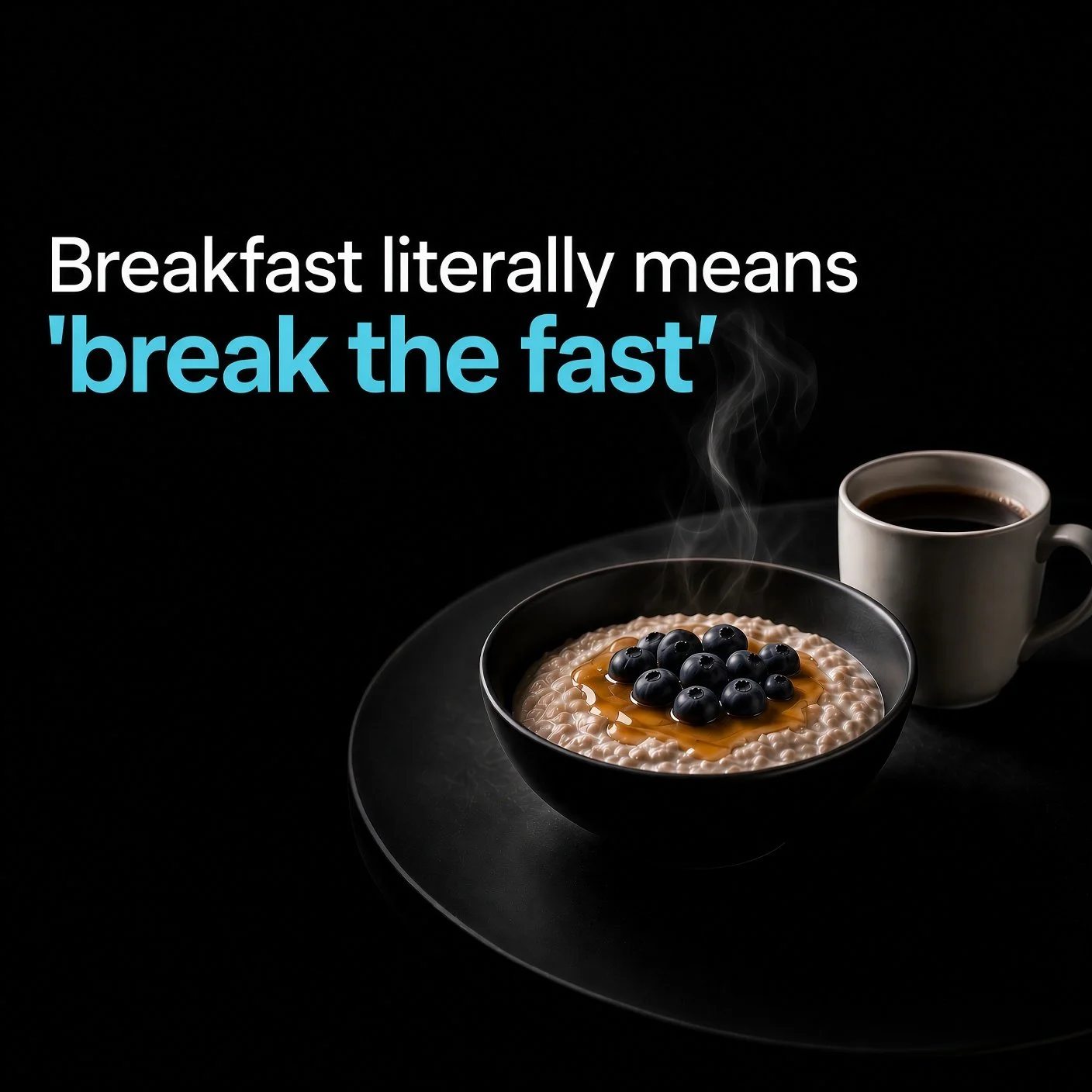
While you sleep, your body is not idle. It is clearing metabolic waste through blood and cerebrospinal fluid, repairing tissue, and burning through the energy stores left from the night before. By the time you wake, your system is primed for fuel. Withholding that fuel forces it to run on stress hormones and unstable glucose.
That is not a neutral choice for the brain.
What the newest research shows
The link between breakfast and mental health is no longer just clinical observation—it is increasingly supported by large-scale data.
A 2025 systematic review and meta-analysis of 12 studies involving more than 420,000 people found that skipping breakfast was associated with an 83% higher risk of depression. Other recent analyses show clear dose-response patterns: the less frequently people eat breakfast, the higher their odds of both depression and anxiety symptoms, especially in adolescents and young adults.
Mendelian randomization research (a method that helps test causality using genetic data) has strengthened the case further. It found evidence that breakfast skipping is causally linked to higher risk of major depressive disorder and ADHD, along with reduced cognitive performance.
U.S. high-school data from the CDC’s Youth Risk Behavior Survey and studies from China, Hong Kong, and Bangladesh all point in the same direction: daily breakfast skippers report more persistent sadness, higher anxiety scores, and poorer attentional control. Breakfast quality and timing also matter—lower-quality or later breakfasts are independently associated with worse mood outcomes.
Why skipping breakfast feeds anxiety and depression
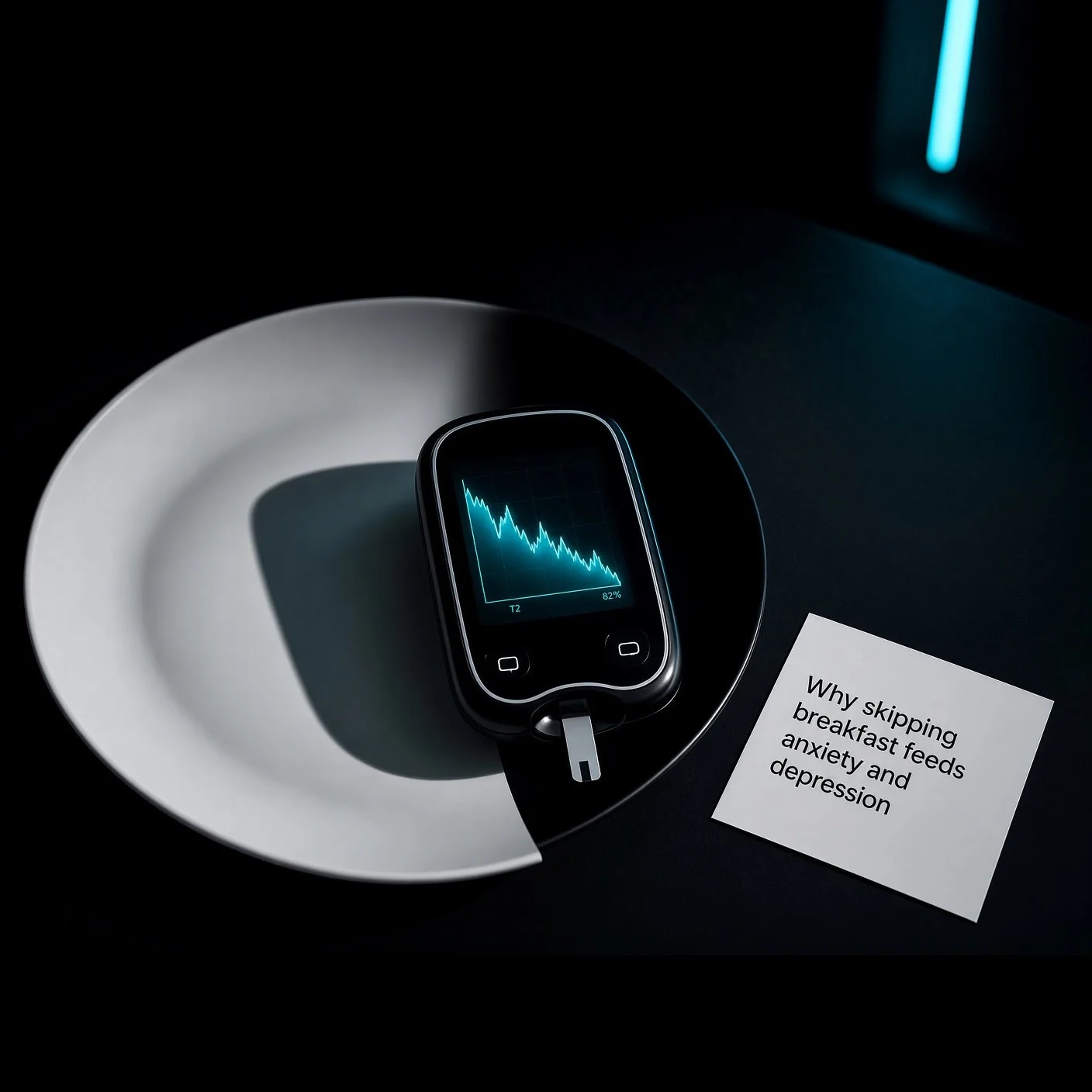
Stable blood sugar is non-negotiable for mental health. When the overnight fast is extended into the morning, several predictable problems appear:
Blood sugar volatility → irritability, racing thoughts, and a low-grade sense of threat
Cortisol and catecholamine spikes → the body interprets the energy gap as stress
Reduced serotonin precursor availability → mood regulation becomes harder
Circadian disruption → the internal clock that governs sleep and alertness gets mixed signals
Impaired attentional control → recent research suggests this may partially mediate the rise in depressive symptoms
Over time these daily insults compound. What starts as “I’m just not hungry” can quietly maintain or worsen anxiety and brain fog even while medications are being adjusted.
What a useful breakfast actually looks like
This is not about forcing a huge plate of food. It is about giving the brain and body the substrate they need:
Prioritize protein and healthy fats (a practical target many of my patients aim for is roughly two-thirds of the meal from these sources)
Add fiber from whole grains, berries, or vegetables when tolerated
Keep simple sugars low so you avoid the mid-morning crash
Aim for consistency and, when possible, an earlier meal
Eggs, Greek yogurt, nuts, leftover protein from dinner, avocado, or a simple protein smoothie all work. The goal is steady energy and fewer blood-sugar swings, not perfection.
Patients who reintroduce a consistent, protein-forward breakfast often report clearer thinking, reduced morning anxiety, and better response to the rest of their metabolic plan within weeks. It is one of the highest-leverage, lowest-cost interventions available.
The bottom line
Skipping breakfast is not a personality trait. For many people with anxiety and depression, it is an overlooked driver that keeps the nervous system on edge. You can take every other recommendation seriously and still leave this one unaddressed—and wonder why progress feels slower than it should.
The newest research reinforces what I see in clinic every week: regular breakfast is a modifiable, evidence-supported lever for mental health.
Calderon Medicine Concierge Mental Health builds complete metabolic protocols that address the foundations—nutrition timing, blood sugar stability, hormones, sleep, and the rest of the root-cause picture—so the changes actually stick.
Ready to stop feeding the anxiety cycle at 7 a.m.?
20% veteran & first-responder discount available.
Sources
Li N, et al. Association of Breakfast Consumption Frequency with Depression and Anxiety Symptoms Among School Students: A Cross-Sectional Study in Eastern China. Nutrients. 2025;17(7):1271.https://pmc.ncbi.nlm.nih.gov/articles/PMC11990333/
Association of skipping breakfast with depression: a systematic review and meta-analysis. Frontiers in Psychiatry. 2025;16:1548282. https://www.frontiersin.org/journals/psychiatry/articles/10.3389/fpsyt.2025.1548282/full
Zhang Z, Tan J, Luo Q. Associations between breakfast skipping and outcomes in neuropsychiatric disorders, cognitive performance, and frailty: a Mendelian randomization study. BMC Psychiatry. 2024;24:252.https://bmcpsychiatry.biomedcentral.com/articles/10.1186/s12888-024-05723-1
Breakfast skipping and depressive symptoms in an epidemiological youth sample in Hong Kong: the mediating role of reduced attentional control. Frontiers in Psychiatry. 2025;16:1574119.https://pmc.ncbi.nlm.nih.gov/articles/PMC12141854/
The Association Between Skipping Breakfast and Anxiety and Depression in Adolescents—A Scoping Review. Children. 2025;12(7):953. https://pmc.ncbi.nlm.nih.gov/articles/PMC12293850/
Associations of breakfast habits and breakfast quality with depression symptoms: A cross-sectional study based on NHANES 2007-2018. PubMed. 2025. https://pubmed.ncbi.nlm.nih.gov/39862989/
Skipping Breakfast and Academic Grades, Persistent Feelings of Sadness or Hopelessness, and School Connectedness Among High School Students — Youth Risk Behavior Survey, United States, 2023. MMWR. 2024.https://www.cdc.gov/mmwr/volumes/73/su/su7304a10.htm
Rana et al. Breakfast Consumption and Its Association With Mental Health Assessed by PSS-10, GAD-7, and PHQ-9 and Academic Performance Among University Students in Bangladesh. Health Science Reports. 2026.https://onlinelibrary.wiley.com/doi/10.1002/hsr2.72270
Follow on Social Media
Latest Instagram post