Sleep Hygiene: The Non-Negotiable Foundation of Metabolic Psychiatry and Mental Resilience
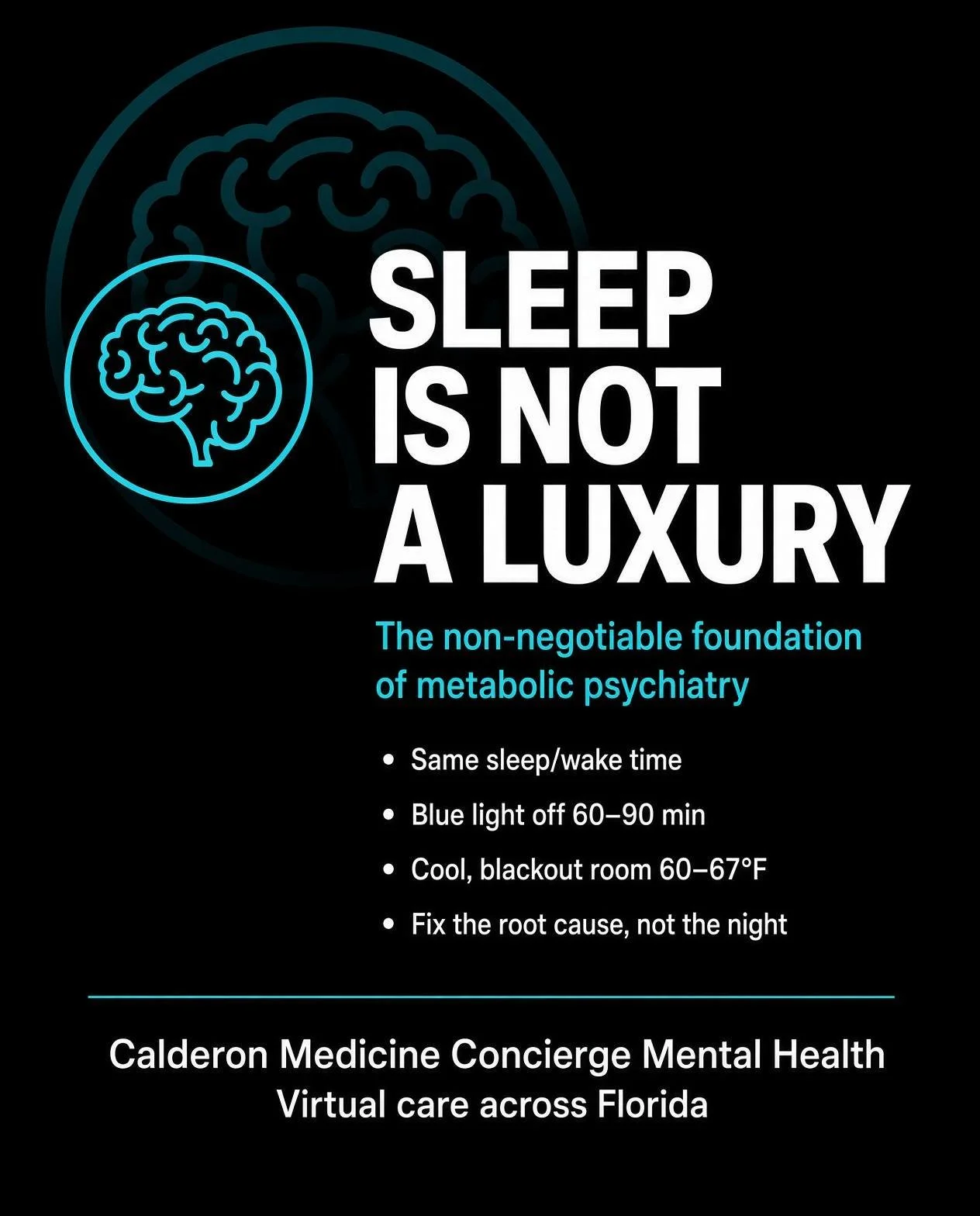
Sleep hygiene isn’t about “relaxing more.” It’s about putting your biology in the optimal position for deep, restorative sleep that actually repairs your brain and body. When you do it right, you fall asleep faster, stay asleep longer, and wake up with stable mood, sharper focus, and lower inflammation.
Think of sleep as your body’s nightly internal housekeeping — the deep clean that clears metabolic waste, balances hormones, and resets your nervous system. Skip it consistently, and you’re looking at skyrocketing risks of depression, anxiety, PTSD flares, diabetes, hypertension, obesity, and cardiovascular disease.
At Calderon Medicine Concierge Mental Health, we treat sleep as a cornerstone of metabolic psychiatry. We don’t hand out generic checklists. We build personalized protocols that fix the root causes — blood sugar crashes, chronic inflammation, circadian rhythm disruption, and nutrient deficiencies — so veterans, first responders, and high-performers finally get the restorative sleep their minds and bodies demand.
As a combat veteran PA-C who survived brutal 72-hour shifts in the fire service and Air Force, I’ve lived the real cost of sleep deprivation. I bring that hard-won insight to every patient.
Virtual consultations across all of Florida. Same-week appointments. Direct access to your provider.
Veterans & First Responders: Get 20% off your first concierge metabolic evaluation.
Why Prioritize Sleep? The Science Is Brutal
Watch this 8-minute video that breaks down exactly why quality sleep is non-negotiable
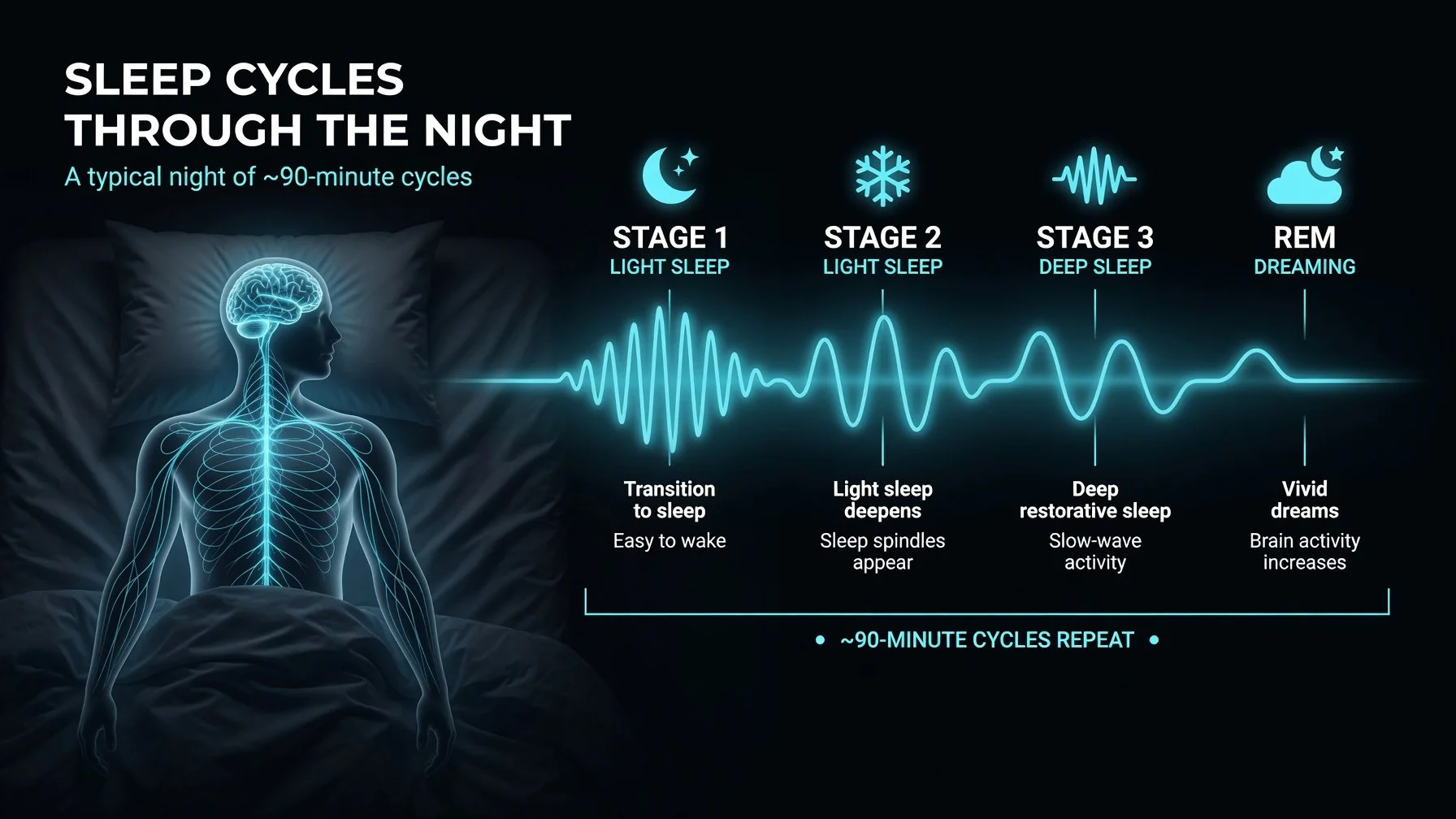
The Stages of Sleep — Know What You’re Missing
We cycle through 3–4 full cycles per night
Non-REM Sleep (Stages 1–3)
Stage 1: Light transition (under 10 minutes)
Stage 2: Deeper consolidation (30–60 minutes)
Stage 3: Deep restorative sleep (first half of night, 20–40 minutes) — critical for physical repair and immune function
REM Sleep
Starts ~90 minutes after falling asleep
Rapid eye movement, temporary paralysis, vivid dreaming
Vital for emotional processing and memory consolidation
Naturally decreases with age
Poor sleep architecture is a massive driver of mental health symptoms. We fix it at the metabolic level.
Sleep Hygiene Practices You Can Start Tonight
Lock in a Consistent Sleep Schedule
Your brain and body thrive on rhythm. Same bedtime and wake time — even on weekends as much as possible.
Aim for at least 7 hours.
CDC guidelines: Adults 18+ need 7+ hours.
Figure out your personal sweet spot and defend it like your life depends on it (because it does).
Build a Bulletproof Nightly Wind-Down Routine
Cut blue light 60–90 minutes before bed. It murders melatonin.
Use night shift mode + blue light blocking glasses (Warby Parker, Felix Gray, or BLUblox).
No screens in bed. Period.
References:
Blue-Light Filtering Spectacle Lenses: Optical and Clinical Performances
Blue light from light-emitting diodes elicits a dose-dependent suppression of melatonin in humans
Upgrade Your Daytime Habits
Cut caffeine after 12 PM.
Limit alcohol — it fragments sleep even if it makes you pass out.
No nicotine.
Finish eating 2–3 hours before bed.
Move your body daily — exercise is one of the best sleep promoters on the planet.
References:
Caffeine Effects on Sleep Taken 0, 3, or 6 Hours before Going to Bed
The relation between cigarette smoking and sleep disturbance
Exercise and sleep: a systematic review of previous meta-analyses
The Bed Is for Sleep and Sex

No Pets, No Exceptions Your adorable dog or cat is sabotaging your sleep and intimacy.
Allergens, parasites, and nighttime disruptions add up.
Set boundaries. Your recovery depends on it.
References:
Nap Like a Pro
10–20 minutes max, before 2 PM.
Done right, it boosts performance without wrecking nighttime sleep.
References:
Master Your Bedroom Environment

Blackout curtains — total darkness.
Cool temperature: 60–67°F.
Breathable, high-quality bedding.
White noise or calming music (proven to help insomnia).
Protect Your Mind from Social Media at Night
Scrolling is engineered to keep you hooked.
Turn off notifications.
The world can wait until morning.
References:
Sleep mediates the association between adolescent screen time and depressive symptoms
The use of social media modifies teenagers' sleep-related behavior
The Bottom Line
Sleep is not a luxury—it's a biological necessity. Every night, your brain repairs itself, consolidates memories, regulates hormones, clears metabolic waste, and restores the neural circuits responsible for mood, focus, emotional regulation, and resilience.
Chronic poor sleep doesn't just leave you feeling tired. It increases the risk of depression, anxiety, PTSD, ADHD symptoms, bipolar mood instability, cognitive impairment, metabolic dysfunction, obesity, diabetes, cardiovascular disease, and dementia.
If you've been relying on caffeine to get through the day or sleeping pills to get through the night, it may be time to address the underlying factors disrupting your sleep. Lasting mental health begins with restoring healthy brain function—and quality sleep is one of the most powerful ways to do that.
Ready to stop surviving and start sleeping—and feeling—better? Discover how personalized metabolic psychiatry can help address the root causes affecting both your sleep and your mental health.
Continue Your Metabolic Psychiatry Journey
Sleep is one pillar of optimal brain health. Explore these evidence-based resources to learn how nutrition, metabolism, exercise, and personalized psychiatric care work together to support lasting mental wellness.
Metabolic Psychiatry – Learn how inflammation, insulin resistance, mitochondrial function, and metabolic health influence depression, anxiety, PTSD, ADHD, bipolar disorder, OCD, insomnia, and cognitive performance.
The Mediterranean Diet for Mental Health – Discover why one of the world's healthiest dietary patterns supports brain health, reduces inflammation, and is associated with lower rates of depression and cognitive decline.
The Keto Diet and Mental Health: 2026 Science Update – Explore how ketogenic metabolic therapy may improve brain energy metabolism and support individuals living with treatment-resistant psychiatric disorders.
BDNF On Demand – Learn how regular exercise stimulates Brain-Derived Neurotrophic Factor (BDNF), helping the brain build new neural connections while improving mood, learning, memory, and resilience.
Concierge Metabolic Psychiatry in Florida – See how our personalized virtual care combines evidence-based psychiatry with metabolic medicine, nutrition, lifestyle optimization, and comprehensive treatment plans tailored to each patient.
If you're struggling with insomnia, anxiety, depression, PTSD, ADHD, bipolar disorder, chronic fatigue, or treatment-resistant mental health symptoms, a comprehensive metabolic psychiatry evaluation may help uncover the biological contributors affecting both your sleep and your overall well-being.
Ready to reclaim restorative sleep? Schedule your consultation today and discover a personalized, root-cause approach to mental health care.
Follow us on Social Media
READ NOW | Latest Instagram Post